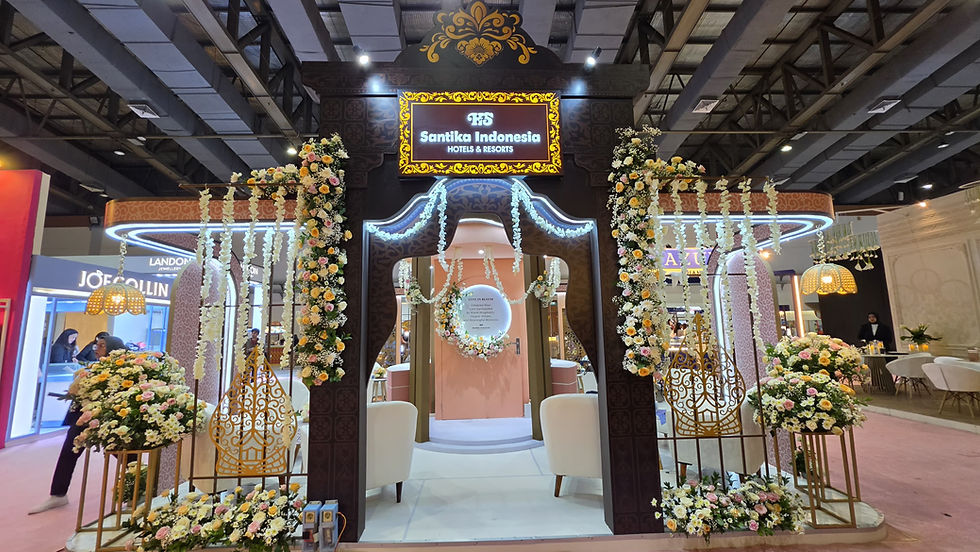
Sensory-Driven Brand Activation in Indonesia: Designing Experiences That Customers Actually Remember

How sensory-driven brand activation helps Indonesian brands create memorable experiences, stronger emotional connections, and higher engagement with customers.
Across Indonesia’s retail, FMCG, and B2B sectors, brands are investing heavily in exhibitions, trade shows, retail activations, and experiential marketing.
The objective is clear.Create attention. Drive engagement. Convert visitors into customers.
Yet a recurring problem continues to surface in post-event reports and boardroom reviews.
Many activations attract visitors, but few are truly remembered.
Foot traffic may be high.
Booth designs may look impressive.
Social media posts may perform well for a few days.
But weeks later, brand recall fades, conversations disappear, and measurable commercial impact becomes difficult to trace.
This challenge is not primarily about budget, creativity, or effort.
It is about how experiences are designed.
Increasingly, research in neuroscience and consumer behavior shows that memorable brand experiences are rarely visual alone. The experiences people remember most strongly engage multiple senses simultaneously. When brands design environments that combine visual impact, sound, scent, touch, and lighting, they create deeper emotional connections that influence both memory and purchasing behavior.
For Indonesian brands operating in increasingly competitive retail and exhibition environments, this shift toward sensory-driven design is becoming a strategic advantage rather than a creative luxury.
When Brand Experience Meets Sensory Architecture
Traditional booth design often focuses heavily on visual impact.
Large LED screens.
Bold graphics.
Impressive structural builds.
While visual design remains essential, it represents only one dimension of how humans process experiences.
Modern consumer research consistently shows that multisensory environments improve brand recall, emotional engagement, and purchasing intent.
When several senses are stimulated together, the brain processes the experience more deeply. Emotional memory becomes stronger, and the brand becomes easier to recall later.
This concept is often described as sensory architecture.
Instead of designing isolated visual elements, brands design an entire sensory ecosystem.
Each sensory layer supports the same brand story.
Each element reinforces emotional response.
And each interaction helps guide visitors through a deliberate journey.
For brands in Indonesia, where exhibitions and retail spaces are becoming more competitive every year, this structured approach to experience design is increasingly important.
The Five Dimensions of Sensory Brand Experience
A well-designed brand activation rarely relies on a single sensory stimulus. Instead, it integrates five complementary dimensions that shape how visitors perceive the brand.
Visual Design and Color Psychology
Visual design still provides the first impression.
Color selection, spatial layout, and lighting hierarchy shape how visitors approach and navigate the space.
Recent design trends show how color psychology can subtly influence emotional response.
Modern Terracotta suggests authenticity and craftsmanship.Digital Lavender conveys innovation and future thinking.Neo Mint communicates freshness and sustainability.Peach Fuzz introduces warmth and approachability.
These choices are not purely aesthetic. They influence perception, mood, and brand positioning.
Strategic lighting further strengthens visual storytelling by highlighting key zones, directing visitor flow, and establishing atmosphere.
Acoustic Design and Audio Identity
Sound is a powerful emotional trigger, yet it is frequently overlooked in exhibition environments.
Music tempo influences visitor behavior. Faster music encourages quicker decision making, while slower tempos encourage longer engagement and exploration.
Beyond background music, brands can develop distinctive audio identities.
A short sound logo, curated soundscape, or subtle ambient audio can instantly reinforce brand recognition and emotional tone.
In crowded exhibition halls, a recognizable audio signature can help a booth stand out without competing visually.
Olfactory Marketing and Scent Strategy
Among all sensory dimensions, scent has one of the strongest connections to memory.
A specific scent can trigger emotional recall almost instantly, even months after the experience.
Despite this, scent marketing remains underutilized in many exhibition environments.
Strategic scent selection aligned with brand positioning can significantly enhance visitor perception. Research indicates that branded scent experiences can increase purchase intent and dramatically improve brand recall.
Luxury retail environments have long understood this principle. Increasingly, exhibition environments are beginning to adopt similar strategies.
Tactile Experience and Material Selection
Touch is another sensory dimension that strongly influences product perception.
The weight of a product.The texture of a surface.The softness of a material.
These elements shape how visitors interpret quality, craftsmanship, and reliability.
In brand activation design, material selection should align closely with brand positioning.
Premium brands often rely on natural materials, refined finishes, and tactile surfaces that communicate craftsmanship.
Sustainable brands may highlight recycled materials or environmentally responsible textures.
When visitors physically interact with materials that reinforce brand values, the message becomes far more credible.
Lighting as an Emotional Tool
Lighting design influences more than visibility.
It shapes mood, guides movement, and defines spatial hierarchy.
Warm lighting often creates intimate, luxurious atmospheres suited for premium products.
Cooler lighting communicates energy, innovation, and modernity.
Dynamic lighting can also introduce moments of surprise or emphasis during demonstrations or product showcases.
When integrated properly, lighting becomes one of the most powerful tools in shaping emotional response.
Designing the Emotional Journey
While each sensory element adds value individually, the real impact emerges when they work together.
This is where the concept of emotional architecture becomes important.
Rather than treating sensory elements as decoration, brands design a structured emotional journey.
Visitors move through a sequence of experiences that gradually build connection and trust.
A typical activation journey may follow a progression such as:
Curiosity
A visually compelling entrance draws attention and invites exploration.
Discovery
Interactive experiences engage visitors and encourage deeper engagement.
Delight
Unexpected sensory moments create positive emotional memories.
Confidence
Clear product demonstrations and tactile interactions build trust and understanding.
Purchase Intent
Visitors leave with a clear understanding of value and a positive emotional association with the brand.
When this progression is designed intentionally, brand activations become far more than temporary displays.
They become memorable experiences that influence decision making long after the event ends.
Why Many Brand Activations Still Miss This Opportunity
Despite growing research around multisensory design, many brand activations still focus primarily on structural design and visual appeal.
Several factors contribute to this gap:
First, activation planning is often highly compressed. Deadlines encourage teams to focus on visible deliverables such as booth structure, graphics, and LED displays.
Second, sensory design requires coordination across multiple disciplines including architecture, lighting design, sound engineering, and behavioral psychology.
Finally, organizations often evaluate activations using short-term metrics such as booth visits or social media impressions rather than long-term brand impact.
As a result, the deeper potential of sensory-driven design remains underutilized.
For companies seeking stronger engagement and better ROI from experiential marketing, this gap represents a significant opportunity.
Designing Experiences That Support Business Outcomes
For senior marketing leaders, the goal of brand activation is not simply to attract attention.
It is to create meaningful customer interaction that supports business objectives.
This may include:
Strengthening brand perception
Increasing product understanding
Generating qualified leads
Building long-term brand loyalty
Sensory architecture provides a structured framework for achieving these goals by aligning design decisions with emotional and behavioral outcomes.
When each sensory element supports the same strategic narrative, brand experiences become more coherent, more memorable, and ultimately more effective.
A Strategic Perspective on Brand Experience Design
For organizations investing in exhibitions, trade shows, or retail activations, the conversation is gradually shifting.
The question is no longer only how impressive the booth looks.
The more important question is how the experience makes people feel and what they remember afterwards.
Designing for emotion requires a more integrated approach that combines creative thinking, behavioral insight, and practical execution.
This is where strategic collaboration between brands and experienced activation partners becomes valuable.
Not to simply build structures.
But to help translate business objectives into carefully designed brand environments.
A Conversation Worth Having
As Indonesia’s experiential marketing landscape continues to evolve, sensory-driven design and emotional architecture are likely to play an increasingly important role in how brands connect with customers.
Organizations that approach brand activation as a strategic experience rather than a visual display will be better positioned to create meaningful engagement and long-term brand value.
For teams currently evaluating how to improve the effectiveness of their exhibitions or retail activations, a structured conversation around sensory experience design can often reveal new opportunities.
If this topic resonates with your current challenges, a short discovery discussion can be a useful starting point to explore how experiential environments can be designed more intentionally.
Get your personalized exhibition design built around your brand, your goals, and your space.
References
Krishna, A. (2012). An integrative review of sensory marketing: Engaging the senses to affect perception, judgment and behavior. Journal of Consumer Psychology, 22(3), 332–351.
Spence, C. (2020). Sensehacking: How to use the power of your senses for happier, healthier living. Viking.
Statista. (2024). Consumer behavior trends in Southeast Asia retail and experiential marketing.
Google Consumer Insights. (2023). The role of experience and emotion in modern consumer decision making.
World Bank. (2024). Indonesia economic outlook and consumer market development.