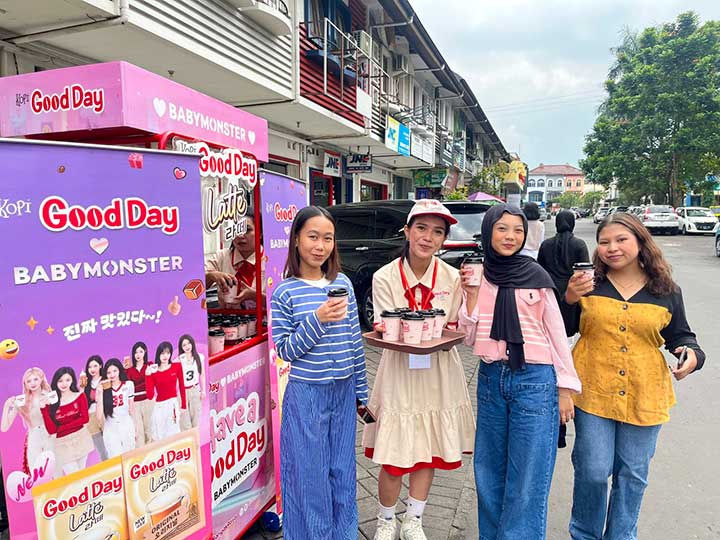
The "Participation Trap": Why Your West Java Activations Feel Like Noise, Not Growth

West Java is a region of staggering numbers: over 50 million people and a GDP contribution that rivals entire Southeast Asian nations. Yet, for many premium brands, the return on investment in this region feels disproportionately thin.
You see the photos of crowded events and the reports of high "engagement," but the market share remains stagnant. This is the Participation Trap—the high-cost illusion of being present without being relevant.
The Invisible Barrier: Why Tactical Spend Fails
In the boardrooms of Jakarta, West Java is often treated as a logistical challenge. In reality, it is a social and economic ecosystem challenge.
Despite heavy investment in traditional "BTL" (Below The Line) tactics, brands often fail because they treat West Java as a passive audience. The tension persists because:
Transactional Fatigue: Consumers are weary of brands that "drop in" for a weekend and disappear, leaving no value behind.
The Nuance Gap: A strategy that works in South Jakarta rarely survives the cultural shift to the Priangan heartlands or the industrial belts of Bekasi.
Lack of Economic Integration: If your activation doesn't feed into the local economy (MSMEs, local leaders, or community hubs), it is viewed as an intrusion, not an invitation.
From "Vendor Thinking" to "Ecosystem Thinking"
To break the cycle of empty activations, senior leaders must reframe Brand Activation as Community Empowerment. This isn't just about "doing good"—it is a cold, calculated business strategy to build brand defensibility.
1. The Power of Paguyuban (Community Circles)
In West Java, the unit of consumption is rarely the individual; it is the circle. Whether it is a hobbyist group, a neighborhood council, or a trade association, these circles dictate brand trust.
Tactical approach: Buying an ad in a community space.
Strategic approach: Becoming the infrastructure that allows that community to thrive.
2. Creating "Mutual Growth" Engines
Strategic activation should answer: How does this brand’s presence increase the local "velocity of money"? * Integration: Utilizing local vendors and talent not as a cost-saving measure, but as a brand-building one.
Legacy: Leaving behind tools, knowledge, or platforms that continue to function after the event tents are folded.
3. Solving the Clarity Crisis
The biggest risk for a Marketing Director is "fragmented data." Many agencies provide vanity metrics (footfall, samples given). A strategic partner provides clarity on sentiment.
Who are the real gatekeepers in this specific district?
What is the friction point stopping a "user" from becoming an "advocate"?
A New Framework for Regional Leadership
If we want to drive mutual growth, we must shift the metrics of success. We propose a move toward a Resilience Model:
Feature | Legacy Activation (Tactical) | Ecosystem Activation (Strategic) |
Goal | Reach & Frequency | Trust & Integration |
Duration | Event-based (Ephemeral) | Platform-based (Sustainable) |
Local Impact | Tenant/Consumer | Partner/Stakeholder |
ROI Metric | Cost per Lead | Lifetime Value & Advocacy |
Positioning for the Future
At Reflex, we operate under the F4Elements ecosystem with a singular focus: bringing structure and confidence to how brands navigate West Java.
We don't see ourselves as a vendor executing a brief. We see ourselves as an extension of your strategic team—the boots on the ground that understand how to translate high-level brand goals into local economic realities.
The goal is simple: to ensure that when your brand enters a community, it doesn't just make noise. It makes an impact that stays on the balance sheet.
Let’s Audit Your Regional Impact
Is your current West Java strategy building a "moat" around your brand, or is it just temporary noise?
We invite you to a strategic discovery session to assess your current regional framework. We can help you identify where your spend is being lost to "transactional fatigue" and how to pivot toward a more resilient, community-based model.
Would you like us to prepare a preliminary landscape analysis for your next quarterly review?
References
Badan Pusat Statistik (BPS) Indonesia. (2024). Provinsi Jawa Barat Dalam Angka 2024.
Google, Temasek, & Bain & Company. (2023). e-Conomy SEA 2023: Navigating transitions.
McKinsey & Company. (2022). The digital archipelago: Driving Indonesia’s economic development.
World Bank. (2023). Indonesia Economic Prospect (IEP): Toward a Green and Resilient Economy.